
Putt Golf
EivaaGamesSports
4.026.00 Reviews
- Version
- 1.85
- Installs
- 10.00K
- Age Rating
- Everyone
Screenshots
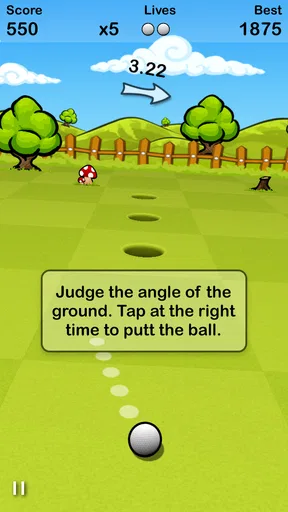
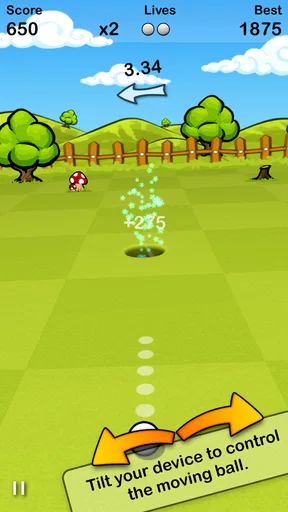
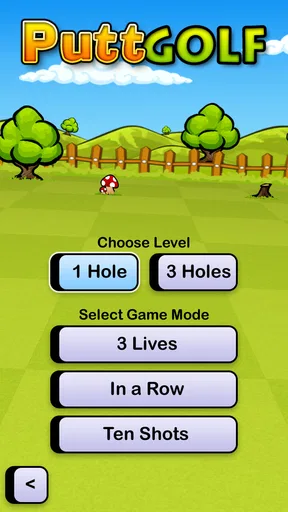
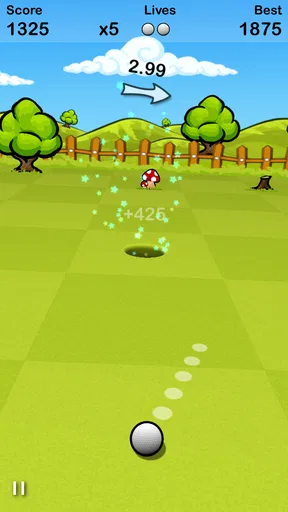
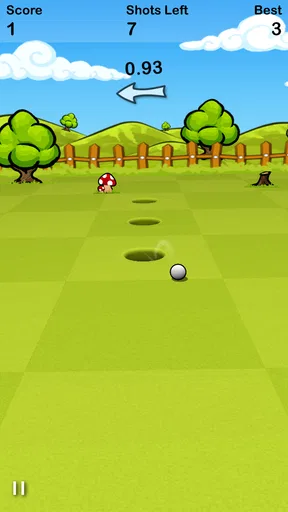
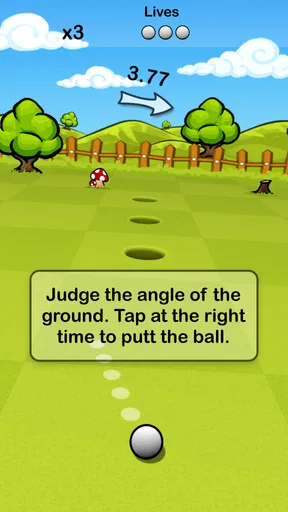
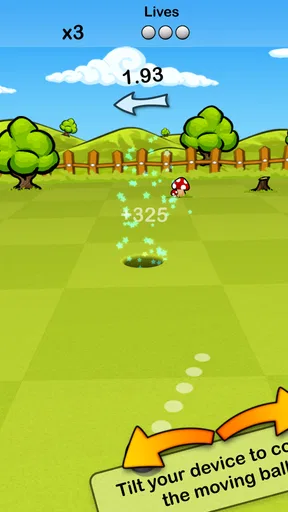
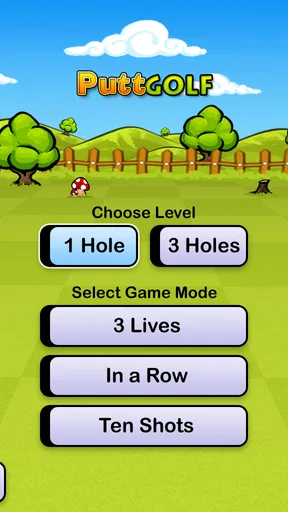
Our Review of Putt Golf
 Analysis by Appyee
I found Putt Golf most enjoyable when I wanted a sports game that could fill a few spare minutes without asking me to learn a complicated control system. It is a focused putting game from EivaaGames, built around judging the slope of the ground and tapping at the right moment. That sounds simple, and it is, but the timing gives each attempt just enough tension to make a short session feel worthwhile.
This is not a full golf simulation with a long career, club selection, or a detailed course-management layer. Its appeal is narrower: read the surface, decide when to act, and try to send the ball toward the hole. I think that narrow focus is both its biggest strength and its main limitation. If you want a quick test of visual judgement, it has a clean idea. If you are looking for a deep golf game, you may outgrow it quickly.
What the core play feels like
The central action is easy to understand. The ground angle matters, and your tap has to match the moment when the putt is most likely to work. I did not need a long tutorial to understand what the game wanted from me, which makes it approachable for casual players and younger users. The Everyone age rating also fits that uncomplicated presentation.
What makes the game more interesting than a simple tap-to-score exercise is the need to pause before acting. A rushed tap can be worse than a slow one because the challenge is not merely reacting; it is interpreting the surface first. I found myself looking for a repeatable rhythm: observe the slope, estimate the line, then commit. That small routine gives the game more personality than its short store summary suggests.
For a realistic everyday use case, imagine waiting for a bus or taking a short break between tasks. This is the sort of game I could open, play a handful of attempts, and put down without feeling that I had abandoned a complicated match. It also works well when I want something interactive but do not have the attention for a long sports session.
Speed expectations during short sessions
Because each attempt centers on one decision, the game feels naturally suited to quick starts and brief play. I would not choose it when I want a large amount of content unfolding over a long evening, but I would choose it when I want to get into the action without navigating through layers of menus or learning a large rule set.
The perceived speed comes less from frantic movement and more from how quickly the game lets me return to the next putt. That distinction matters. This is not an arcade sports title built around constant motion. Its pace is deliberately measured, giving me time to inspect the ground. Players who prefer rapid reflex challenges may find that calm rhythm too restrained, while players who enjoy small precision tests will probably appreciate it.
I also like that the basic interaction leaves room for concentration. A game can be technically fast but mentally tiring if it throws too much at the player. Here, the limited task makes it easier to play casually. I can focus on one putt rather than remembering several controls, managing a team, or following a long match clock.
That simplicity creates a useful trade-off. The game is quick to understand, but the same focused design means it does not offer the variety I would expect from a broader golf game. If your ideal sports title includes different shot types, equipment choices, or a detailed progression system, a full golf simulator will be a better match.
How it behaves when I play repeatedly
The most demanding moments are not demanding because of complex graphics or a large number of on-screen objects. They are demanding because repeated attempts make small judgement errors more noticeable. After several putts, I began to pay closer attention to how I read the ground rather than simply tapping as soon as the ball appeared.
One practical tip is to avoid treating every surface as if it needs the same timing. The angle should influence how patient I am before tapping. A quick decision may feel natural on a straightforward line, but a more awkward slope deserves a deliberate pause. I found that this approach reduced careless misses and made the game feel less random, even though the control itself remains very simple.
Another useful habit is to separate observation from action. Instead of tapping while I am still deciding what the ground is doing, I first identify the likely direction and only then make the input. That sounds obvious, but it is easy to lose discipline in a game that looks so uncomplicated. The short delay between seeing a situation and acting on it is where much of the challenge lives.
During longer play, the heavier demand is therefore on attention rather than on the device. I would describe the game as mentally repetitive in a manageable way: the same basic question returns, but the answer depends on how carefully I inspect each attempt. That makes it suitable for practicing patience, although players who need constant novelty may find the loop narrow.
I would also avoid judging the game after only one or two taps. Its appeal becomes clearer after a few attempts, when the difference between an impulsive tap and a considered one starts to matter. Conversely, if several rounds leave you wishing for more controls or more strategic choices, that reaction is probably accurate rather than something you need to overcome.
Stability and recovery after interruptions
My overall impression is that the game’s limited scope should make it easy to return to after a short interruption. A putting attempt is a small unit of play, so it does not carry the same commitment as a full match. If I need to stop suddenly, I am less likely to feel that I have lost a substantial session.
That is an important advantage for mobile use. A game designed around short decisions fits naturally into moments when notifications, travel, or everyday tasks can interrupt me. I would still treat it as a casual pick-up-and-play title rather than assuming it will replace a larger sports game, but its compact structure is well suited to an unpredictable schedule.
The game was released on September 5, 2014, and its current version is 1.85. Those details tell me that it belongs to an older, established style of mobile game rather than a newly launched production chasing current visual trends. I see that as useful context: I approach it for its straightforward putting idea, not for modern presentation or a large live-service ecosystem.
When deciding whether to install it, I would also consider the device requirement. It supports devices running Android 5.1 or later, which covers older hardware more comfortably than many recent games. That does not guarantee identical behavior on every phone or tablet, but it does make the title more approachable for people who are not using a current flagship device.
Its modest premise also suggests a lighter workload than a visually ambitious three-dimensional sports game. I would not claim a specific battery draw or memory footprint without measuring each device, but there is no reason to approach it as if it were a demanding console-style production. For an older Android phone that can run the required operating system, this is the kind of game I would consider before a much larger golf download.
Device limits and practical expectations
The minimum operating system is Android 5.1, so owners of very old devices should check compatibility before planning around it. On a supported phone, the focused design should be less intimidating than a game that loads expansive courses, detailed crowds, or many simultaneous systems. I especially see it as a sensible option for a spare device used for light entertainment.
Screen size can affect comfort even in a simple game. On a small phone, judging the ground angle may require more concentration because there is less room to inspect the scene. A larger display could make the visual reading more comfortable, although the game’s basic control concept remains accessible either way. I would choose a device where the play area is easy to see rather than one where every element feels cramped.
Touch accuracy is another practical consideration. Since the experience depends on tapping at the right time, a screen that misses or delays inputs would undermine the game more than it would affect a turn-based title. If your phone has an unreliable touchscreen, this is not the sort of game where that problem can be ignored.
The game is free, which makes trying it relatively easy. It includes in-app purchases priced at $2.99 per item, so I would still check the purchase controls on the device before handing it to a child. The free entry point is helpful for curious players, while the purchase option means families should use their usual account safeguards rather than assuming every part of the experience is entirely outside the purchase system.
With over ten thousand installs, it has reached a modest audience rather than presenting itself as one of the dominant mobile sports games. Its average rating is 4.0 from more than a hundred ratings, with several dozen written reviews. I read that as a sign of a generally positive but not universally compelling experience: enough players enjoy the focused idea, while others may want more depth than the game is designed to provide.
Who will enjoy it most
I would recommend it to someone who likes short sports games with a clear objective and a small amount of pressure. It is particularly suitable for players who enjoy visual judgement and timing more than complicated menus. Someone new to mobile golf can understand the premise quickly, while an experienced player may appreciate the chance to practice restraint rather than manage an entire course.
It can also work for families looking for a simple, age-appropriate game. The Everyone rating and uncomplicated putting concept make it less intimidating than a competitive sports title filled with complicated rules. I would still explain the optional purchase price of $2.99 per item to younger players and keep device purchase protections active.
I would skip it if your priority is a complete golf career. There is no reason to choose a focused putting game when what you really want is club customization, tournament structure, multiple shot types, or a simulation of a full round. A conventional golf simulator will give you more to manage, even if it also takes longer to learn and demands more storage or attention.
I would also skip it if you need constant multiplayer competition or a large social layer. The confirmed identity of this title is its putting challenge, not a broad online sports platform. For a friend who wants head-to-head matches, rankings, or team play, I would point toward a game built around those features instead of promising that this compact experience will provide them.
How it compares with other mobile sports choices
Compared with a full golf simulation, this game is easier to pick up and less demanding in terms of decision-making. You are not being asked to plan an entire hole through multiple shot types. That makes it more welcoming for a quick break, but it also removes the long-term strategy that gives larger golf games their staying power.
Compared with a fast arcade sports game, it is calmer and more precise. The satisfaction comes from making a good read and choosing the moment well, not from chaining flashy actions together. Players who enjoy careful timing may find it more rewarding than a frantic title, while players who want immediate spectacle may consider it too quiet.
Compared with a casual puzzle game, it has a more physical sense of outcome because the imagined line and the timing of the tap affect the putt. Still, it does not have the broad puzzle variety of a large puzzle collection. Its strongest comparison is therefore not “more content,” but “a more focused kind of attention.”
One non-obvious strength is that the narrow design makes it easier to identify why an attempt went wrong. In a complicated sports game, a failure can come from equipment, positioning, stamina, opponent behavior, or a dozen other systems. Here, I can usually reflect on my reading of the angle or my timing. That clarity makes each miss feel more instructive, even when the overall game remains simple.
Where the design starts to feel limited
The same clarity can become repetition. Once I understood the basic rhythm, the game’s appeal depended heavily on whether I still enjoyed making similar judgements. There is no need to pretend that a focused putting loop offers the breadth of a complete sports package. If you need a steady stream of new mechanics, this may feel thin after the initial curiosity wears off.
The age of the release is also worth keeping in mind. Players accustomed to polished modern interfaces may notice that this is an older mobile design. I would not install it expecting the presentation, onboarding, or feature density of a recent premium sports production. Its value is in direct play, not in feeling like the newest title on the platform.
In-app purchases are another point to consider. The game is free to start, but items cost $2.99 each. That does not automatically make the model problematic, yet it means the experience is not identical to a completely purchase-free game. I prefer to make that decision consciously, especially on a shared family device.
There is also a difference between being light on device resources and being universally comfortable. An older supported phone may run a simple game more easily than a large simulation, but a small screen or unreliable touch panel can still make precision play frustrating. Device age alone is not the only factor; input quality and screen visibility matter just as much here.
My performance verdict
After looking at its speed, repeated-play demands, recovery-friendly structure, and device requirements, I see Putt Golf as a compact and practical sports game rather than a full golf destination. It should appeal most to people who want a free, focused putting challenge that can be played in short bursts. The Android 5.1 minimum makes it a reasonable candidate for older compatible devices, and its simple premise avoids the heavier expectations associated with large golf simulations.
The best reason to install it is its clear relationship between observation, timing, and result. I like being able to understand the task quickly and improve by slowing down, reading the angle, and tapping with more care. That gives the game a small but genuine skill curve instead of making every attempt feel like a random button press.
My recommendation comes with a clear boundary. Choose it for quick putting sessions, casual play, and a low-complexity sports experience. Do not choose it as a substitute for a complete golf career, deep customization, or a socially competitive sports platform. The free price makes trying it easy, while the $2.99-per-item purchases and older design are worth remembering before you settle in.
For my own use, I would keep it as a break-time game: something to open when I have a few minutes, want a little concentration, and do not want to commit to a full match. It is not ambitious, but it understands what it is trying to do. If that focused putting loop sounds more appealing than a crowded golf simulator, this modest EivaaGames title is worth a look.
Verdict
Strengths of Putt Golf
- Simple controls make it easy to start playing immediately.
- Short rounds are convenient for quick breaks or casual sessions.
- Bright visuals give the courses a cheerful, approachable style.
- Progression provides motivation to replay courses and improve scores.
- Works well for players looking for a relaxed, low-pressure golf game.
Limitations of Putt Golf
- Course variety may feel limited after extended play.
- Some levels rely heavily on precision and can become frustrating.
- The game may offer less depth for experienced golf simulation fans.
- Ads or optional purchases can interrupt the overall experience.
- Performance may vary on older devices or during busy scenes.
Other Releases by EivaaGames
View All
Real Pool 3D
Sports4.4

Bowling 3D Pro
Sports4.6
Similar Picks in This Category
View All
8 Ball Pool
Miniclip.com4.8

Pooking - Billiards City
AIM TOP GAME TECHNOLOGY LIMITED - pool4.6

Carrom Pool: Disc Game
Miniclip.com4.4

EA SPORTS FC Soccer Mobile 26
ELECTRONIC ARTS4.6

World Soccer League
mobirix4.3

Soccer Cup 2026: Football Game
INLOGIC SPORTS - football tennis golf soccer4.3
Frequently Asked Questions
What is Putt Golf?
Putt Golf is a casual mini-golf game designed for quick, relaxing rounds on a mobile device. It typically focuses on guiding the ball through creative holes while avoiding obstacles, controlling shot strength, and trying to complete each course in as few strokes as possible. Its simple controls make it approachable for beginners, while accurate aiming and careful timing provide a challenge for experienced players.
How do you play Putt Golf?
Gameplay is generally based on aiming your shot, choosing the right amount of power, and releasing at the correct moment. Players must account for walls, ramps, turns, moving obstacles, and other course features that can redirect the ball. Although the basic controls are easy to understand, completing holes efficiently requires patience and experimentation, especially when learning the layout of more complicated stages.
Is Putt Golf free to download and play?
Putt Golf can usually be downloaded without an upfront purchase, but the exact monetization system may depend on the version available for your Android or iOS device. Free versions may include advertising, optional purchases, unlockable content, or other limitations. Before installing, it is worth checking the store listing for current information about ads, in-app purchases, supported devices, and any premium edition.
Does Putt Golf require an internet connection?
The basic golfing experience may be playable offline, which is useful when you want a short game while travelling or when mobile data is unavailable. However, some features can require an internet connection, including advertisements, online rankings, cloud synchronization, updates, or special events. Because requirements can vary between versions, check the app’s current store description if offline access is especially important to you.
Is Putt Golf suitable for children and casual players?
Putt Golf is generally suitable for casual players because the main objective is easy to understand and the controls do not require advanced gaming experience. It can also appeal to children, although parents should review the age rating, advertising, and in-app purchase settings before allowing independent play. Difficulty may increase across the courses, so younger players may need help with precision and shot planning.
Play our best games!


